INDEX of TOPICS
CONSTRUCTION
The hull and deck of Moby Boat are made of ferro-cement which combines a frame of steel to provide strength and flexibility and high quality cement to make the structure watertight. As a result, there have never been any leaks through the hull or deck to the interior of Moby Boat.
Like any amateur option for building a boat, the results vary wildly, and there have been well-publicized accounts of terrible outcomes. One of the method's many advantages is that, when well built and maintained (like Moby Boat), a ferro-cement boat lasts a very long time. Such boats have been floating for over a hundred years.
Information about ferro-cement is available at https://www.ferrocement.org. A full album of photos created along each step of the construction of Moby Boat is available for viewing.
Frame
The hull was built beside a farm house near Ottawa in 1971.
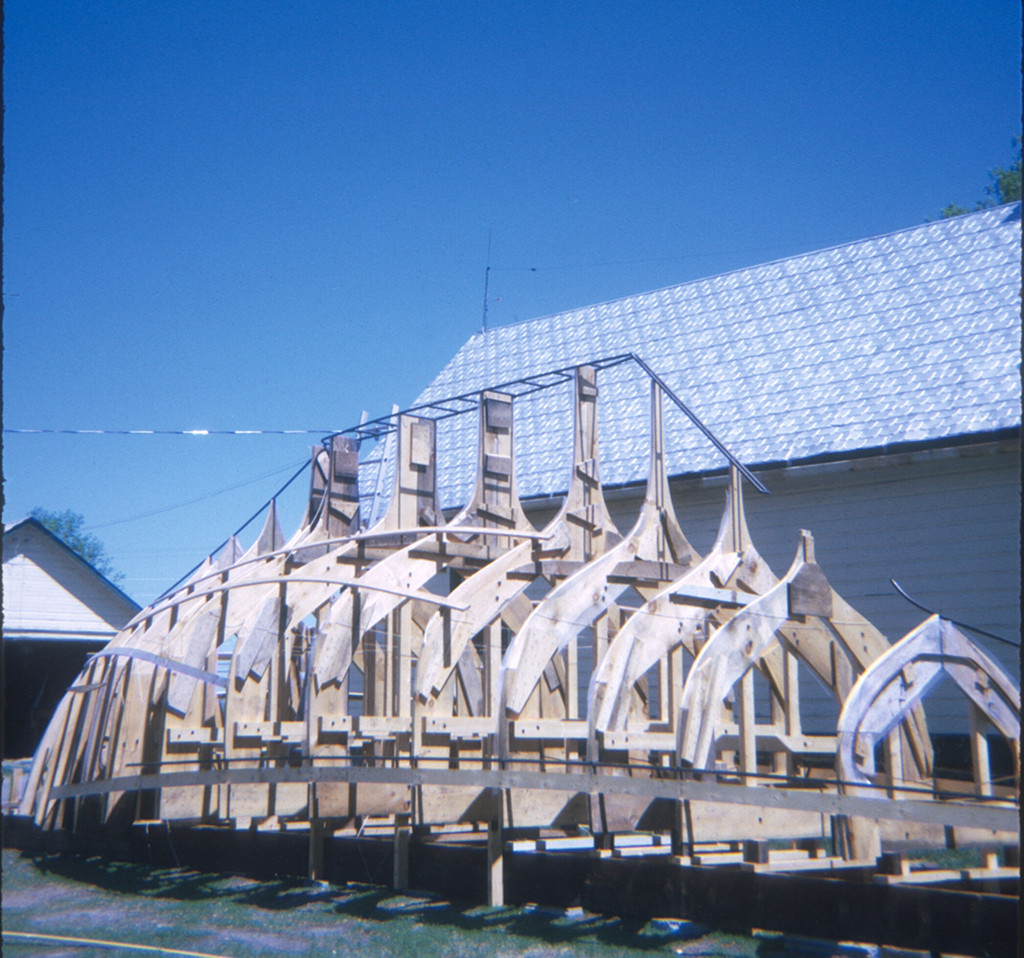
- The initial step was to create a wood frame for the bulkheads.
- A steel rod outlined the bottom contour of the boat.
- Wood stringers spanned the frame horizontally.
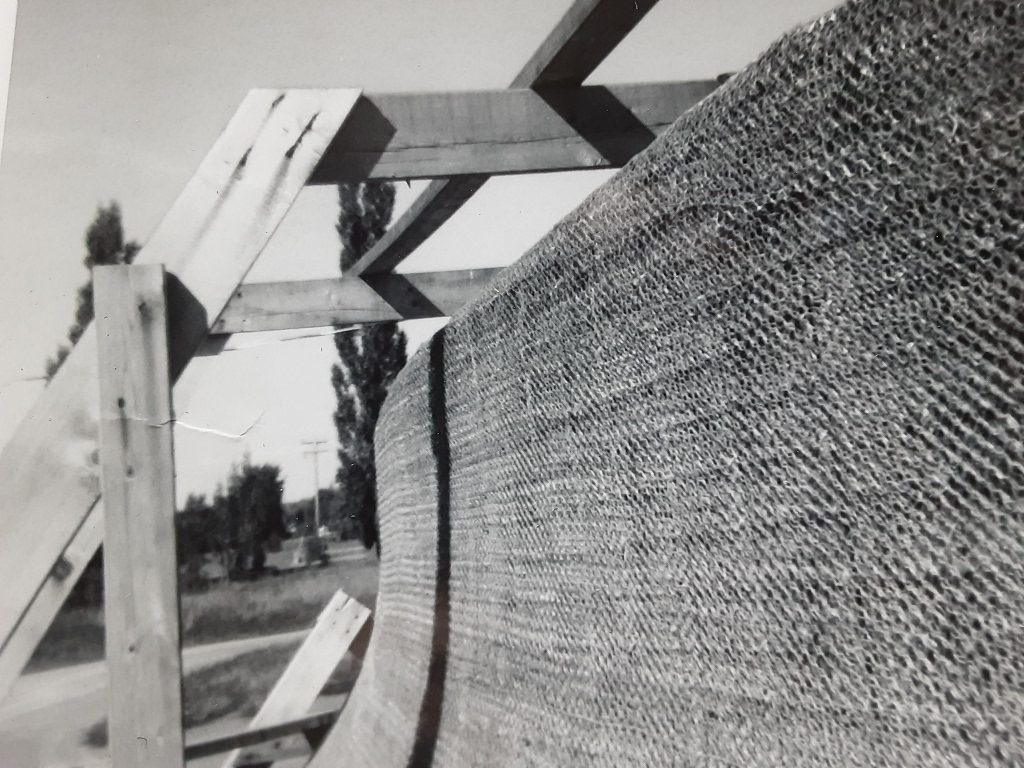
- Next, four layers of quality wire mesh were applied to the entire hull.
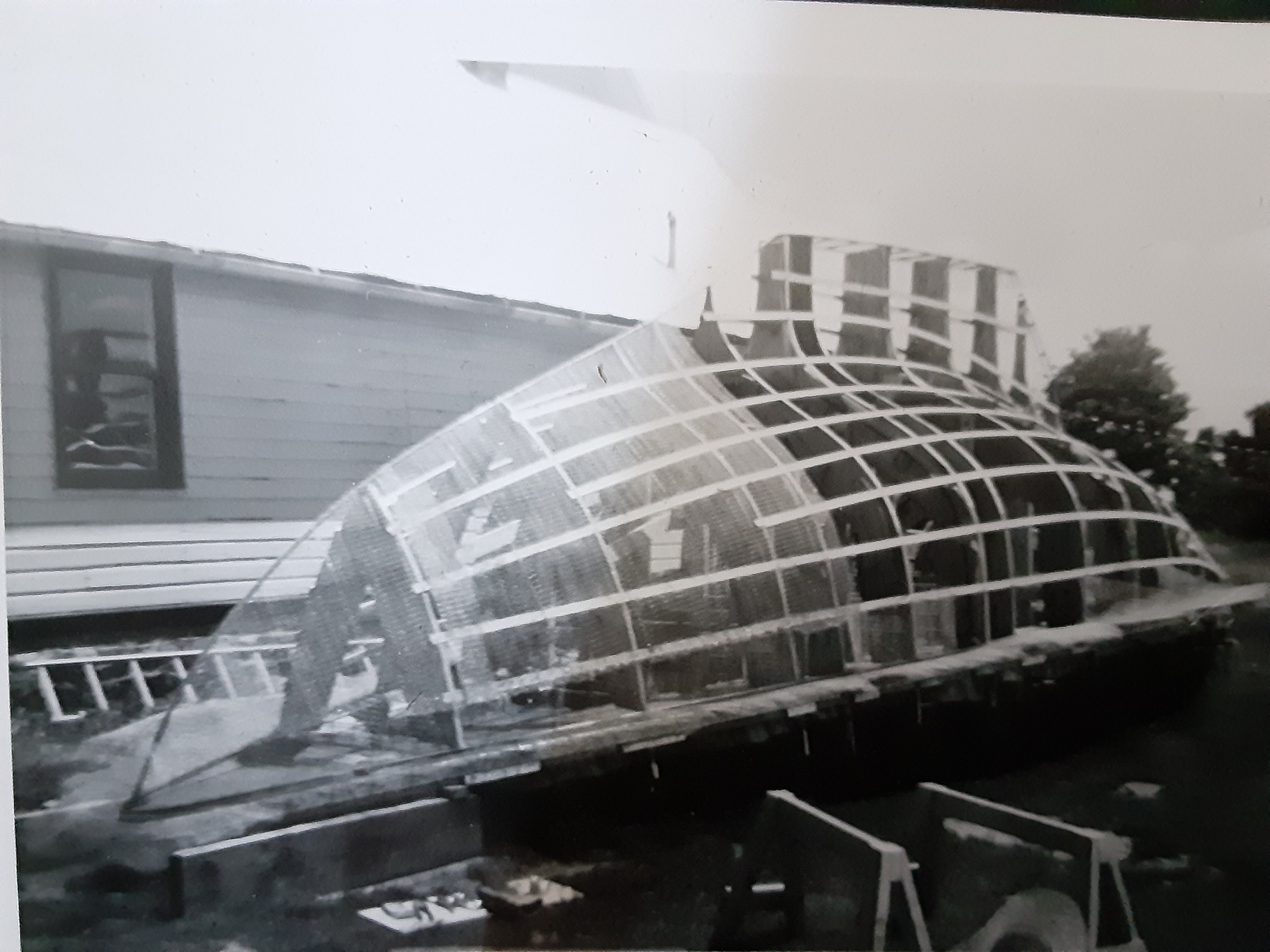
- This was followed by forming spring steel rod over the entire outer contour both horizontally and vertically.
- Wire then twisted each small section of rods together at the resulting steel intersections of 2 inches by 6 inches.
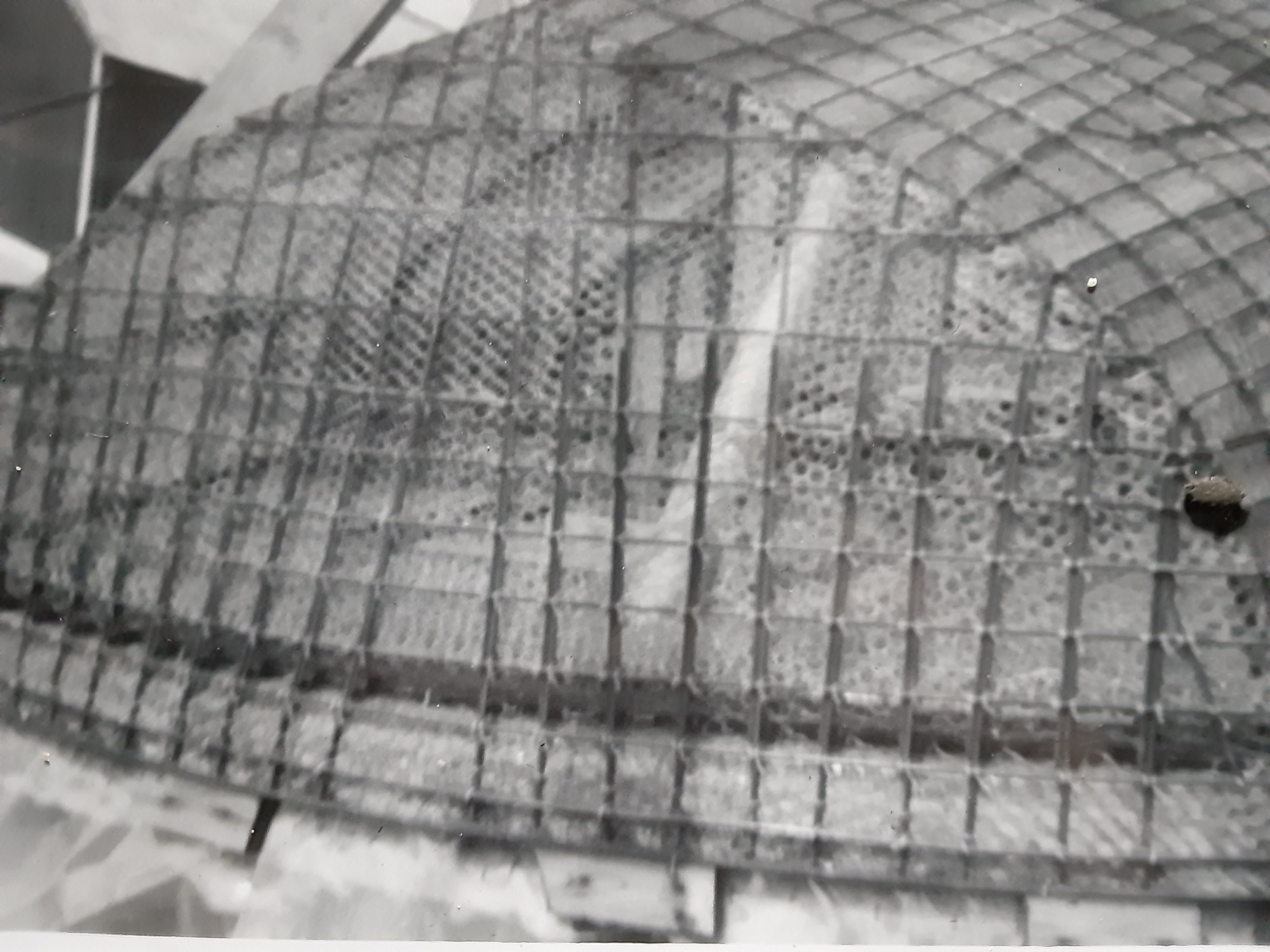
- An additional four layers of wire mesh were then applied over the entire contour, for a total of 8 layers of mesh and 2 of spring steel.
- The final preparation stage involved weaving wire in and out of each small section to ensure the resulting hull width was ideal.
- The same steps were followed for creating the bulkhead frames and the deck ready for cementing.
Cementing
- The hull was cemented in a single day in October 1971. Crew consisted of 4 professional plasterers as well as a number of willing friends.
- Using tools, vibrators and a lot of muscle strength, everyone pressed cement through all the layers of mesh and wire using a high grade of cement – not the coarse formulation used for sidewalks.
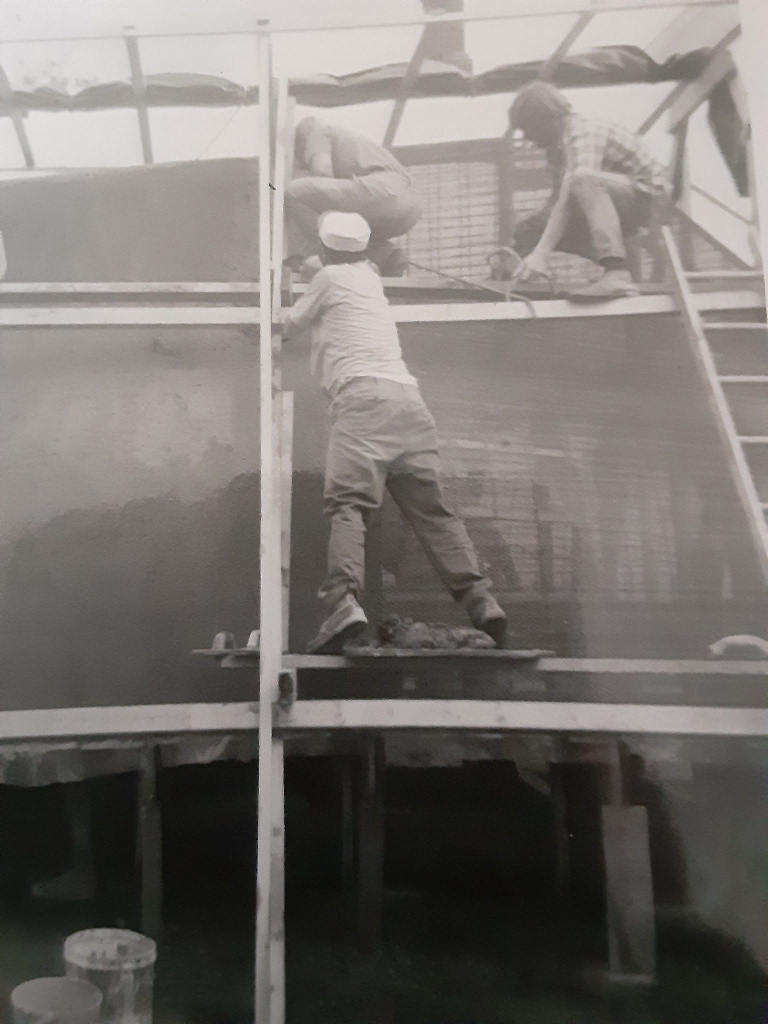
- The cement was then “cured” for a month, initially with steam (until we drained the well dry!) and then with the continuous application of wet coverings to the surface.
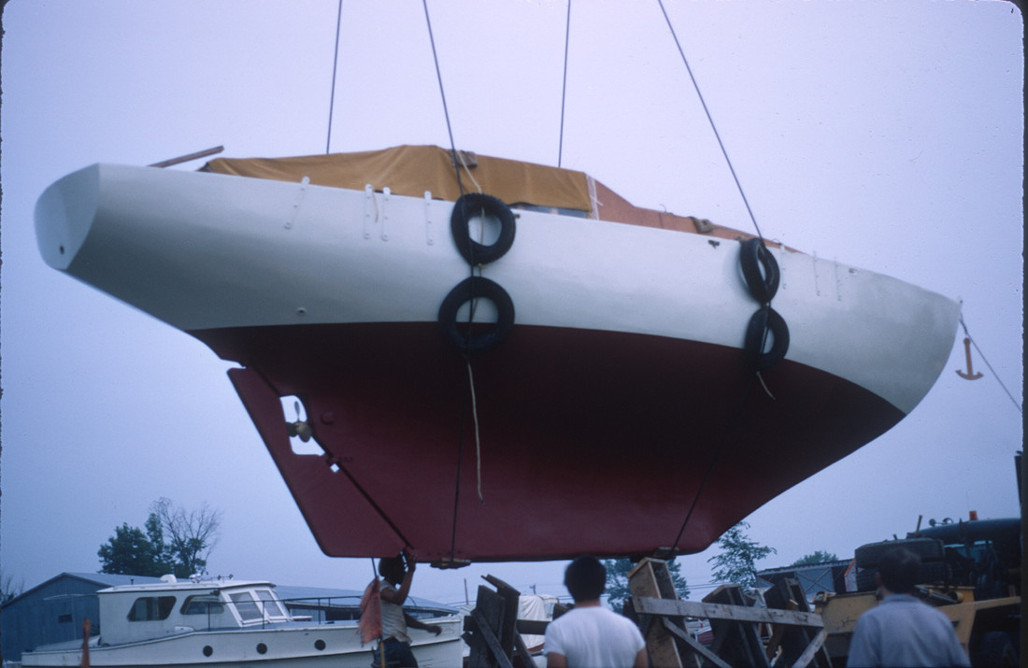
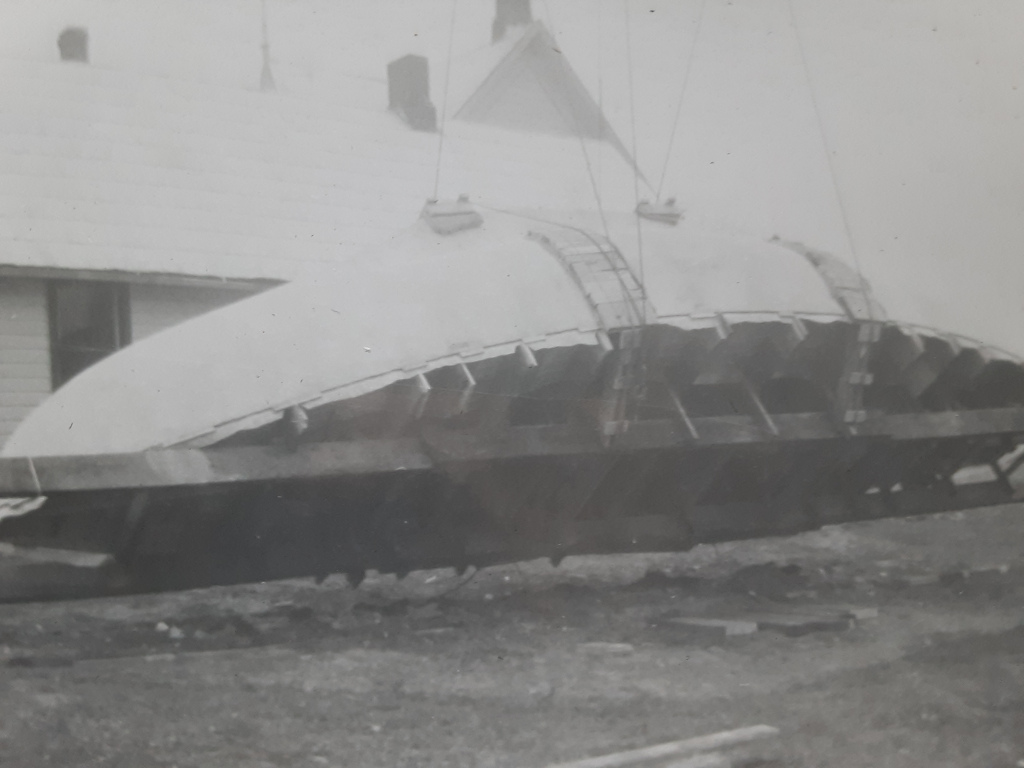
- Then a 60-ton crane rolled the boat from its inverted position to standing on its keel. The winter months involved removing the wood frame, filling any gaps where the cement did not penetrate.
Cabin Top
The purchase of an English oak tree and the custom cutting by a local mill provided all the framing in the cabin.
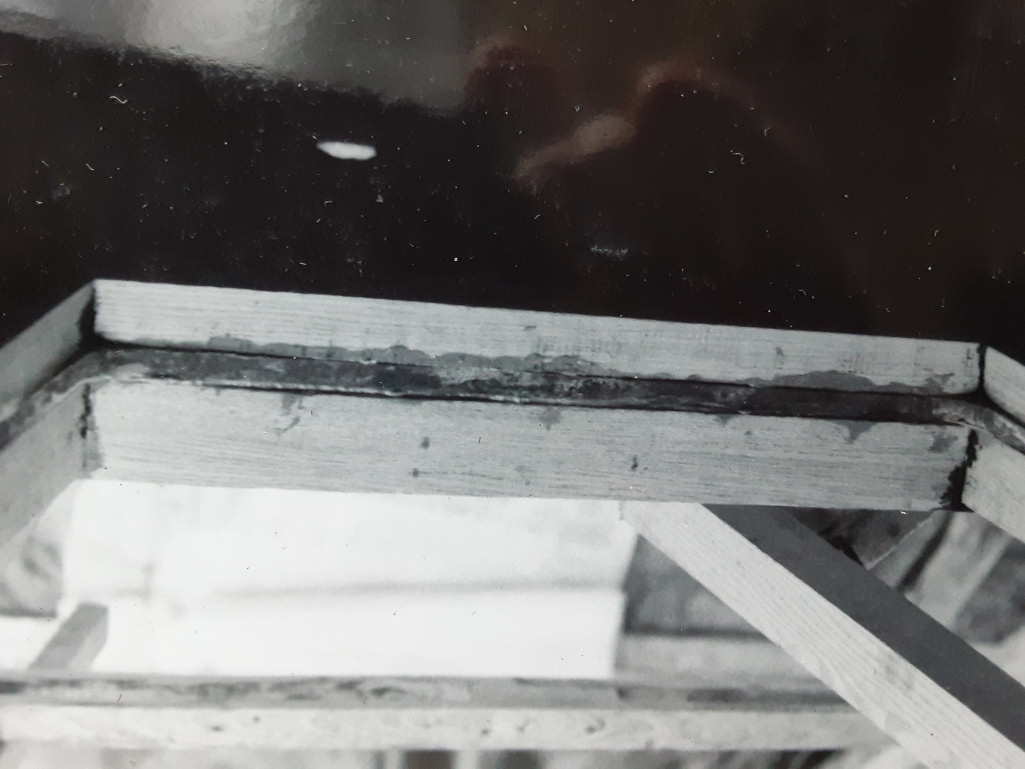
- Wide-diameter planks were epoxied and bolted through the cement decks as the framework.
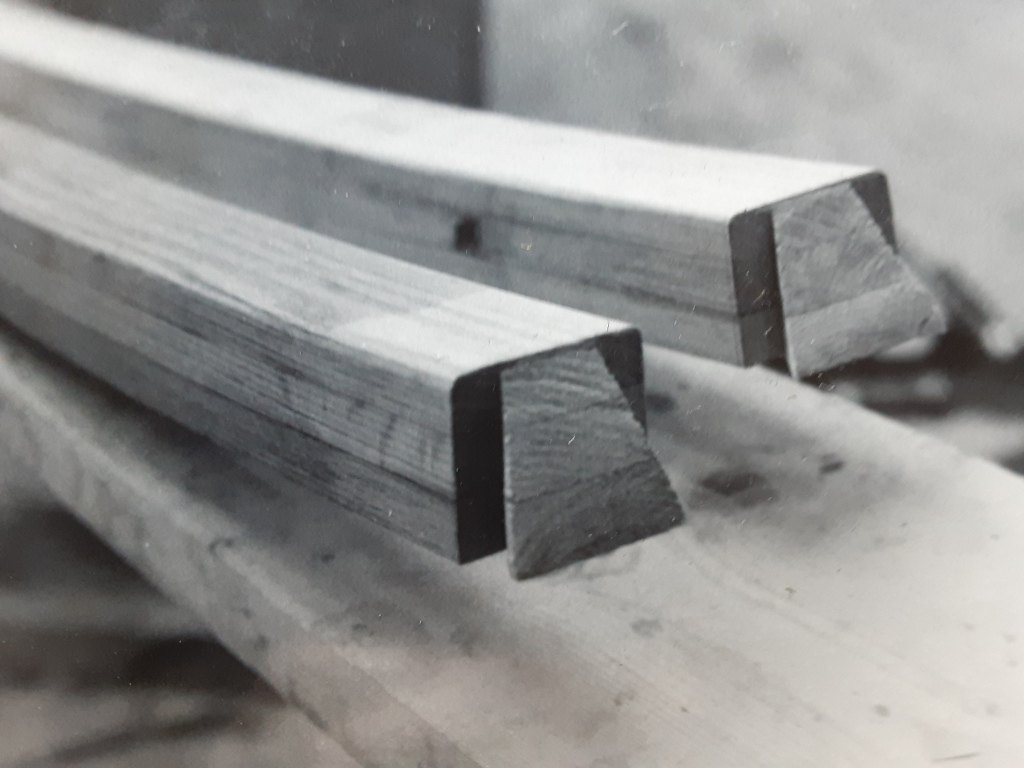
- Sections of 1 inch by 3 inch oak were glued together for the roof beams, then placed in a steam box, then immediately moved to a form built to create the roof arch
- Notches were then cut in these roof beams to slot into the deck beams.
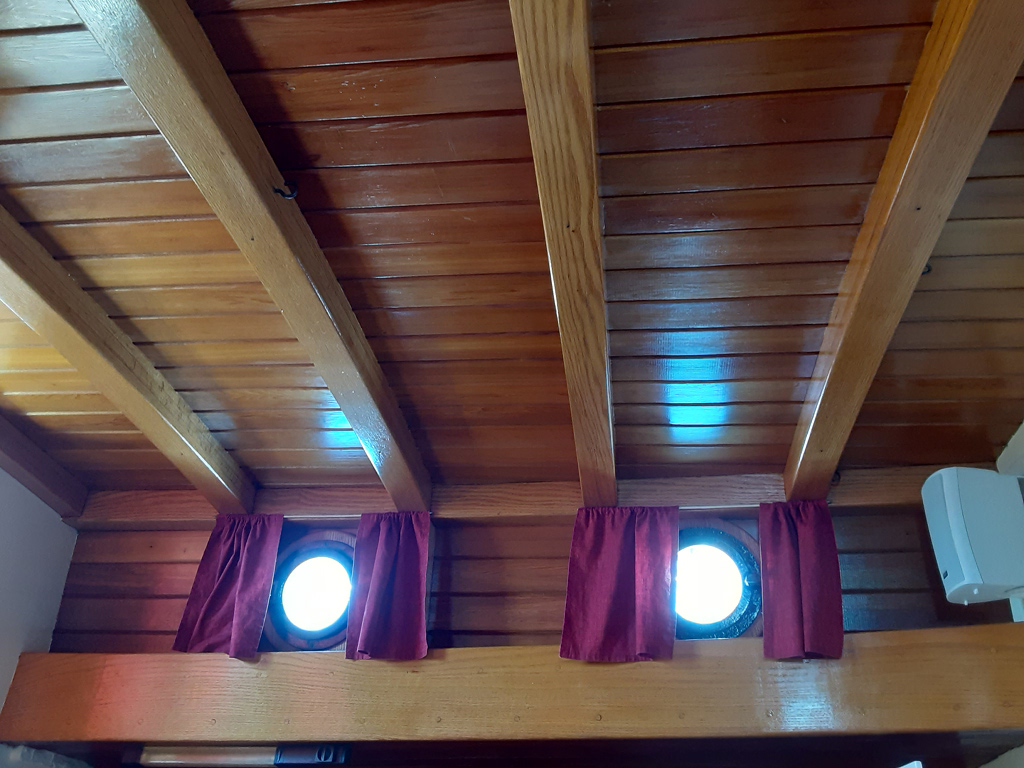
- Next came the addition of tongue and groove western red cedar to the entire cabin roof.
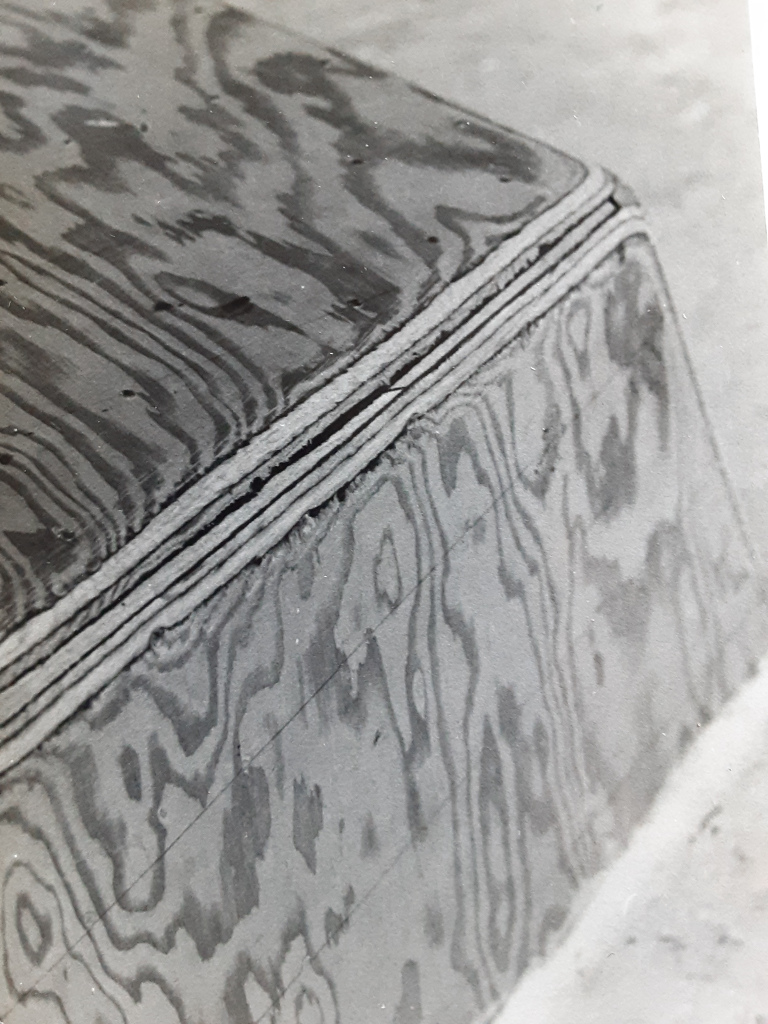
- Following that was the addition of thick marine plywood with shaped contours everywhere.
- A layer of fibreglass cloth completed the structure of the roof ready for painting.
When finished on the inside with polyurethane, the result is the appearance of the cabin ceiling in the boat today.
First Launch
In early summer 1972, Moby Boat was launched for the first time.