INDEX of TOPICS
HEAT, LIGHT, AIR, and WATER
Heat
Cold, rainy weather is a standard on the BC coast, not only during the fall and winter seasons but also throughout the year in the waters north of Campbell River.
When motoring, the heat produced by the engine warms the boat interior. Cooking and backing on the galley stove also produces heat. In addition, there are two fireplaces:
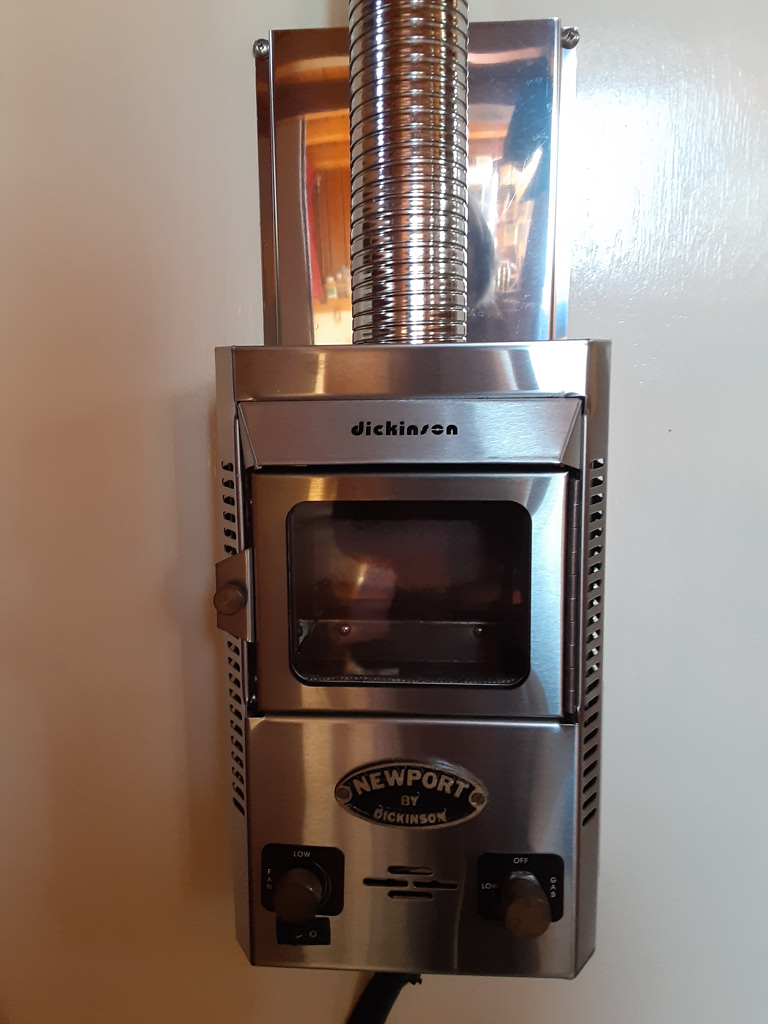
- the Newport P-9000 Propane Fireplace/Heater to provide quick heat inside the boat when traveling as well as at anchor and in port;
- made of stainless steel;
- manufactured by Dickinson Marine (1997) Ltd. in Coquitlam BC;
- a clean burning gas appliance intended for use on board small vessels;
- furnished with a double-walled vent pipe and cap;
- fresh air pulled from the outside, through the outer pipe into the combustion chamber;
- exhaust gas leaves the vessel through the inner pipe, while exchanging heat through the wall of the outer pipe to the cabin;
- because the heater does not use air from the cabin nor does it exhaust waste gases into the cabin, interior oxygen levels are not depleted and there is no buildup of moisture.
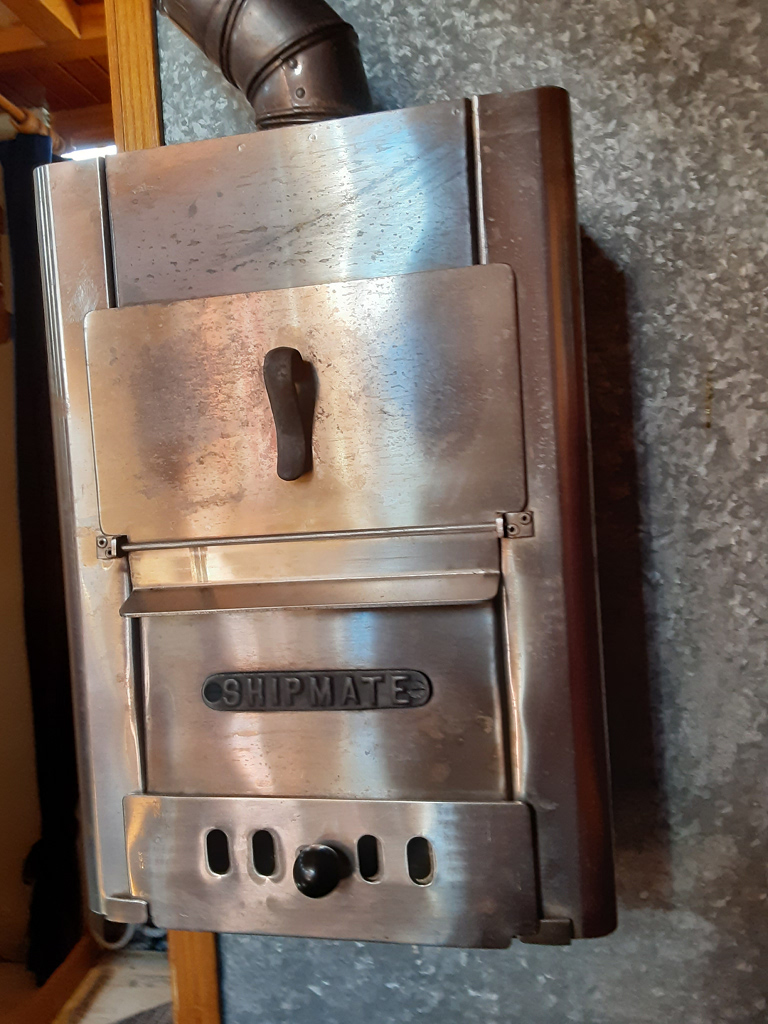
- The Shipmate fireplace for wood pieces is the best option for providing major heat when at anchor (but not in port or when traveling). An added benefit is the rapid drying of moist air in the boat during heavy weather.
- A tall smoke stack is stored in the boat for quick installation on the deck to ensure ash does not affect the mainsail.
- Any wood source may be used, including dry chips easily found along the shore. A good supply of wood is included with the purchase of the boat.
- The original Shipmate Stove Company went out of business in the late 1990’s but their quality products are still used extensively.
Light
- The windows in the galley, the front and back hatches when open, and the 8 portholes provide a great deal of natural light.
- Fluorescent fixtures above the stove, main cabin bunks and front bunk run on the boat’s 12 volt battery.
Air
Ventilation is provided through air entering through . . .
- the front and back hatches;
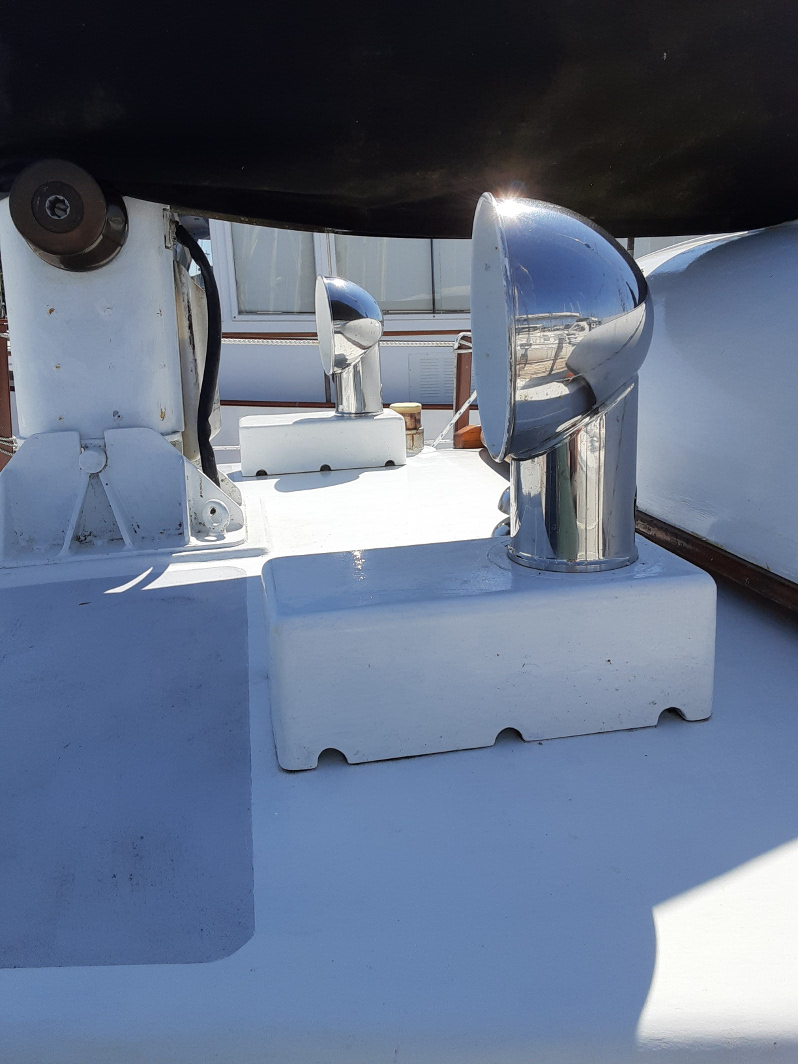
- the ventilation boxes over the hanging locker and the head;
- the 8 opening portholes.
Water
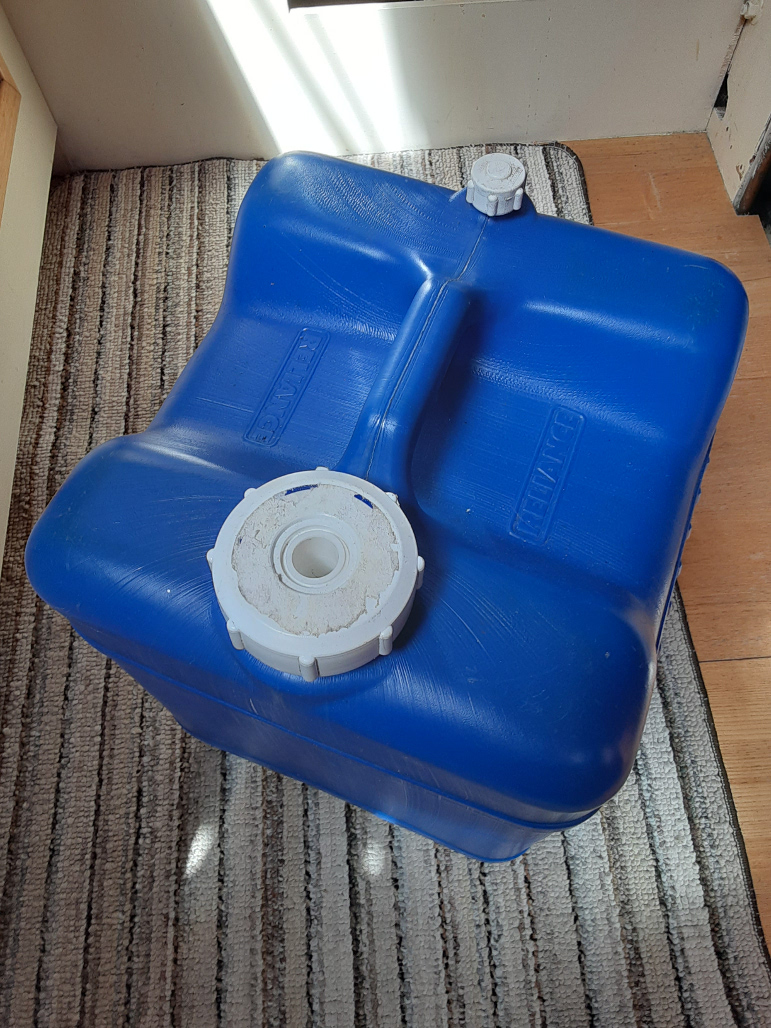
- Large water containers are stacked under the floor of the Main Cabin below a hatch cover for access.
- A hose can be moved from one container to another as the original one is depleted.
- Water of good drinking quality is not universally available in times of drought, and in some locations the water is unpalatable because of a sulfurous odour or potential pathogens. For that reason, the separation of water from different sources into specific containers allows water to be allocated from each container for its appropriate use (e.g. drinking and cooking versus cleaning).